
I am going to be completely honest with you - I used to bro out, hard. My fratty college days turned into a 9-5 faster than I could blink an eye, but those college habits die hard. I thought I knew all there was to know about nutrition: eat 300 grams of protein bruh, high glycemic carbs (Pabst Blue Ribbon counts) and low fat meals ONLY, because eating fat makes you fat bruh. I couldn’t have been more wrong. Sure, I was strong as an ox, but I looked like the Michilen Man… bloated, puffy and downright pudgy. Experimenting with different nutritional ideologies as well as supplementation theory over the past ten years has led me to the following baseline theory: your body is a chemistry set. There are many ways to get to a certain ‘compound’ if I may; however, each method comes along with its own set of parameters and reactions that you must experiment with.
At that time, I wasn’t willing to give up binge drinking, so my high protein, high carb, low fat diet was probably the best choice for me… as I was downing a few thousand calories of booze a night, 4 nights a week. Should I have thrown some organic vegetables into my meals? Probably, but to hell with wasting space in my stomach with vegetables - those weren’t going to get me them GAINS I was looking for (smh…Idiot). Eventually, a light switch turned on and I decided I was going to put my big boy pants on. As the transition from 'Frat Bro Numbero Uno' to 'contributing member of society' occurred, my nutritional ideologies changed as well. I started balancing my macronutrients a bit, measuring all of my intake like an OCD squirrel counting nuts before winter. I was still eating a very carb heavy diet, but my carbs were coming from huge Chipotle Burrito Bowls, not twelvers of Pabst and enough Fireball to tranquilize a rhino. Again, missing the forest for the trees, as I was carbing up hard and paying zero attention to sodium content while sitting on my ass for 14+ hours a day.
Fast forward a few years - experimentation with Intermittent fasting led me to put some real research into insulinogenic effects of different types of food. I was sick of being hungry all day at work, and was looking to trade in my Michelin Certified Physique for that 8 pack. Lo and behold, Fats are not insulinogenic (I'll get into this in another article). Wait, so you are saying that I can eat fats to sustain energy without spiking my insulin, thus keeping my body in a fat burning zone while not breaking my “fast” and still perform in the gym? …LIGHTBULB.
Hopefully by now I've peaked your interest in the wonderful world of dietary fats and their potential to change your mind, body and life. I've mentioned a few different topics: intermittent fasting, insulinogenic effects of food, and glycemic index to name a few, while getting to the first topic in my series on nutrition, FATS. I'll be going into depth on all of these topics in my articles over the next few months on AlphaNerd, so hold onto your spectacles, it's go time.
Before attempting to overhaul your diet in the next 3 minutes after hearing how increasing dietary fats can help you lose body fat, increase lean mass, and become an overall bigger and better badass than ever, you need to understand the basics. A gram of Fat contains 9 calories, which is more than double of its two macro counterparts - Protein and Carbohydrate (4 cal/gram) - so watch your intake. On the bright side, Fats are much more satiating than carbohydrates or proteins. Translation: you can eat less of them and feel more full.
I could bore you with the differences between classifications of lipds (fats) by breaking down triglyceride vs phospholipid chemical structures (blah blah blah); but bottom line, it probably wont help you. So we are going to cut to the chase. You need to understand that dietary fat sources are going to be made up of a combination of the following categories: Monounsaturated Fatty Acids (MUFAs), Polyunsaturated Fatty Acids (PUFAs), Saturated Fats and Trans fats. Pretty much any fat source that you eat is going to be made up of a combination of at least two of those categories.
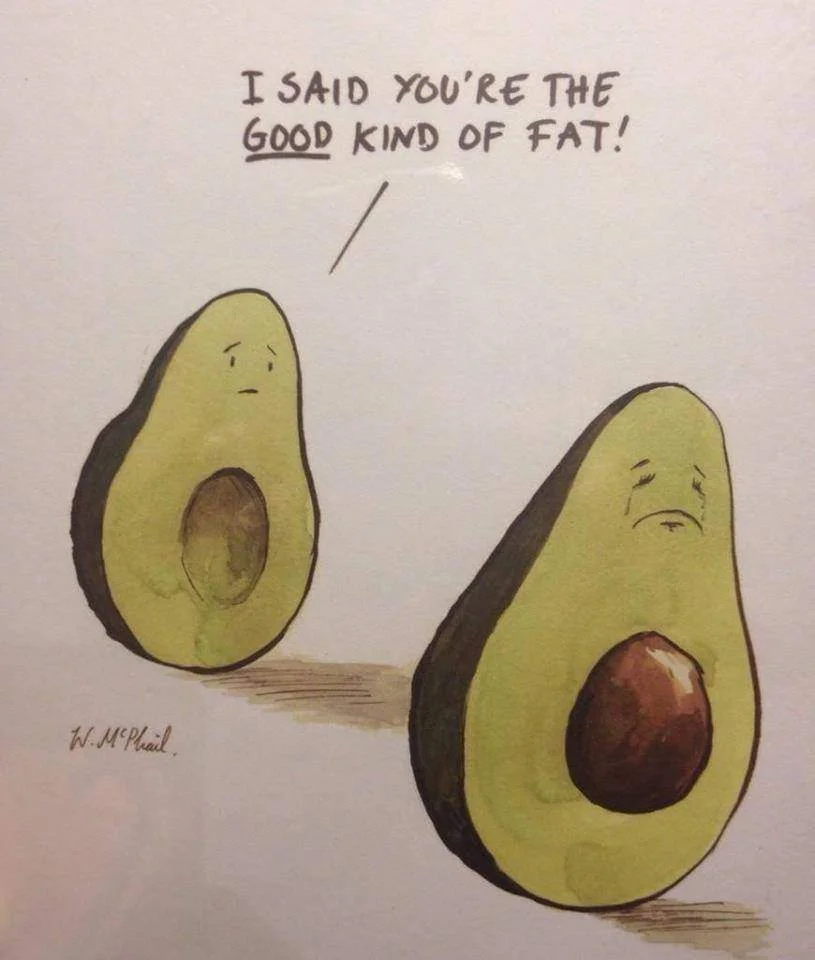
Your goal is to find the RIGHT combination as well as making sure that your dietary fat sources are coming from QUALITY food sources. Let me clarify… NOT ALL FAT SOURCES ARE CREATED EQUAL. Eating a scone, chock full of high glycemic carbs and fat sources from heat processed vegetable oils, is not the same thing as eating half an avocado with some pan fried potatoes. Sure, both are going to be high in fat, primarily composed of MUFAs and PUFAs - but going back to the ‘chemistry set’ metaphor, your body is going to react VERY differently to the fat content of each meal. The fats are chemically different, as the heat processing changes the structure of the fats, thus changing the way that your body metabolizes them. BOTTOM LINE: stay away from processed foods, not all macronutrients are created the same, and this doubly applies to fats.
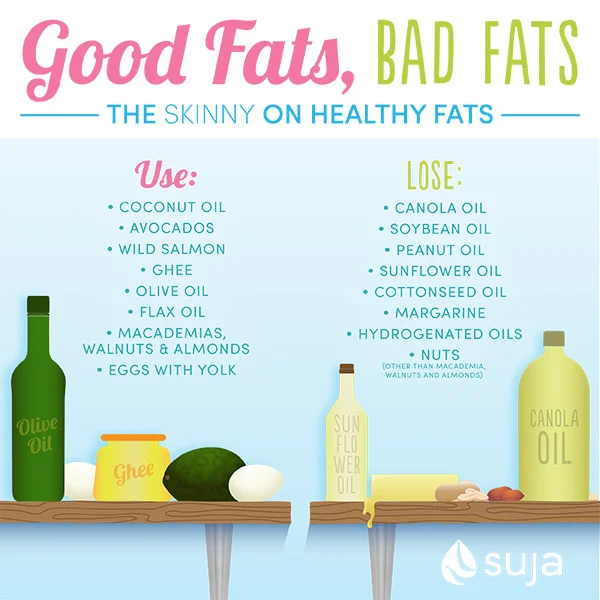
Over the next few articles, I will be going into more depth regarding fats and their role in a healthy lifestyle. I'll be providing examples of each different type of fat, how to incorporate them into your diet, and even some healthy recipes and how I would situationally place them into your daily routine.
INFORMATION ROUND UP:
- Eating fat does not make you fat
- Fats contain 9 calories per gram
- Eating a diet high in quality fats makes you less hungry
- Dietary fats are a combination of MUFAs, PUFAs, Saturated Fats and Trans fats …find your balance
- Eat QUALITY sources of fats
Bad fats are bad, mkay?
